
LED lighting for platforms and tracks
The new LED lighting for the Jungfernstieg U1 station
Hamburger Hochbahn AG has been working at full speed on the barrier-free redevelopment of the entire underground network for a few years now. With new lifts, raised platforms and guidance aids, 79 of the 93 underground stations already offer easy and comfortable access to the underground network, particularly benefiting older people, parents with prams and passengers with limited mobility. As part of the development project funded by the Senate of the Free and Hanseatic City of Hamburg, the Jungfernstieg U1 station will also undergo comprehensive refurbishment, featuring new, efficient LED lighting.
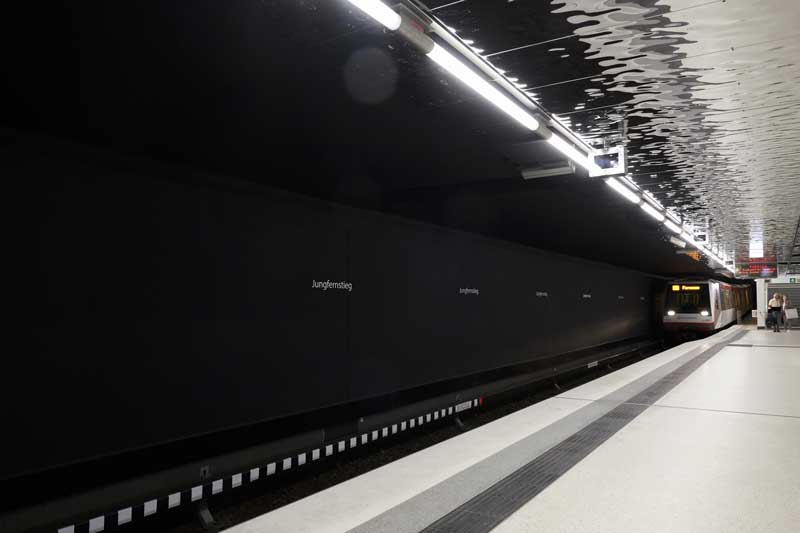
While the ceiling and the walls surrounding the track area are designed in matt black, the platform with terrazzo concrete floor is kept very light.
The renovation and modernisation of the U1 Jungfernstieg station, which is showing its age, had been an issue for quite some time. In view of the barrier-free upgrade, it made sense to implement both projects at the same time. Opened in 1934, the platform of the U1 runs directly under Jungfernstieg and the Reesendamm Bridge and is the first station to be located under water, crossing the Binnenalster at right angles. The underground station is an important public transport hub and is used by more than 100,000 passengers every day. It takes the numerous visitors from near and far to Hamburg's well-known boulevard and right into the vibrant centre of the Hanseatic city.
New design creates a light and airy feel
The new design by WRS Architekten & Stadtplaner from Hamburg focuses on an impressive visual effect: In order to make the low and cramped-looking space appear larger and wider and to virtually double the height of the room, the ceiling above the platform is mirrored. The reflections themselves resemble a slightly wavy and undulating water surface symbolising the underwater location of the station. While the ceiling and the walls surrounding the track area feature a matt black design, the platform with its terrazzo concrete floor is kept very light to create a welcoming impression in the space. This is enhanced by LED lighting that bathes the entire space in soft, uniform light, while naturally meeting the illumination level requirement of 150 lux on the platform and stairs.
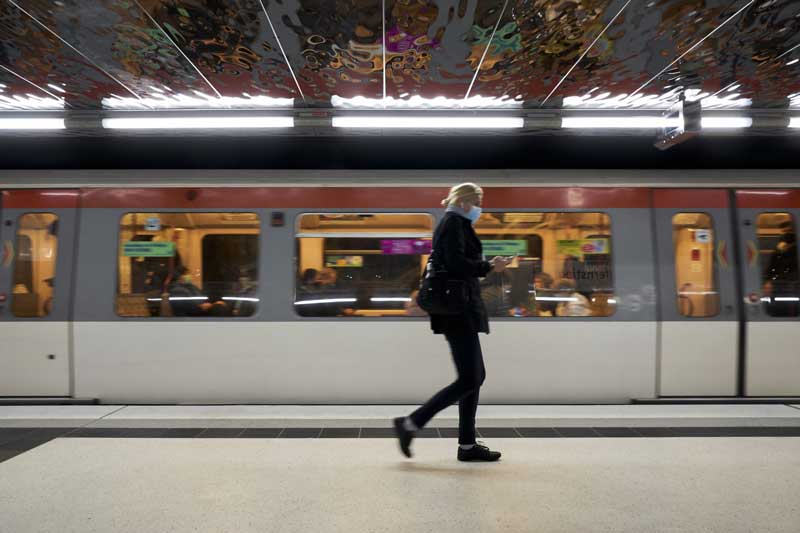
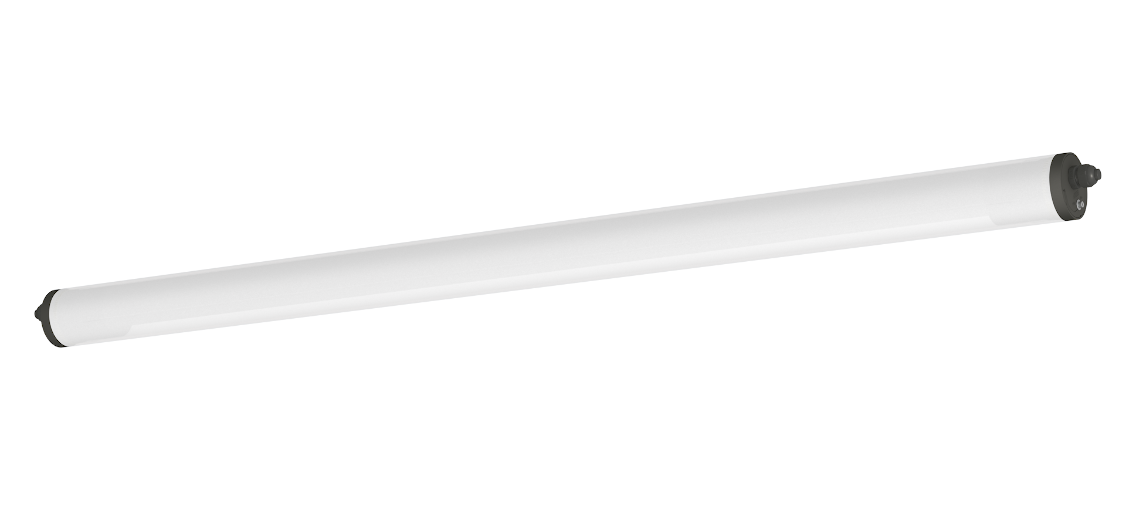
The NORKA ZUG LED tubular luminaire has a diameter of only 75 mm and can be integrated excellently into relatively low spaces when used as a continuous.
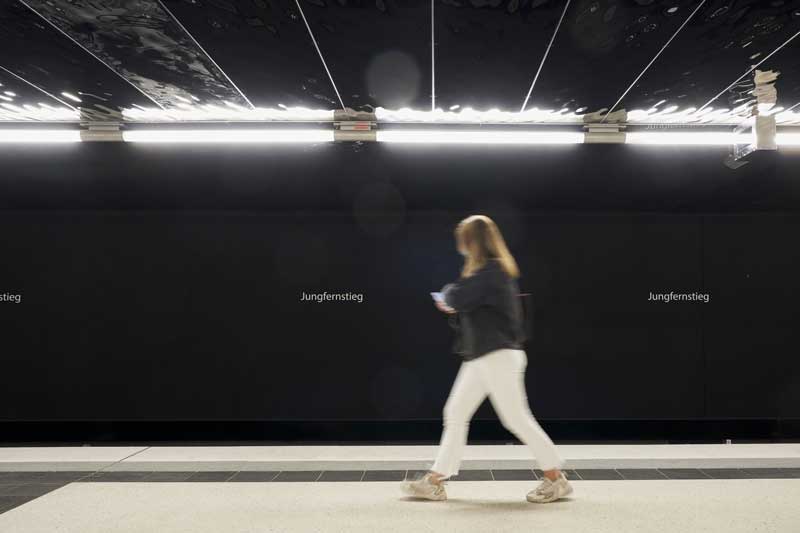
The matt black surfaces in the track area make the defining edges of the space almost completely disappear.
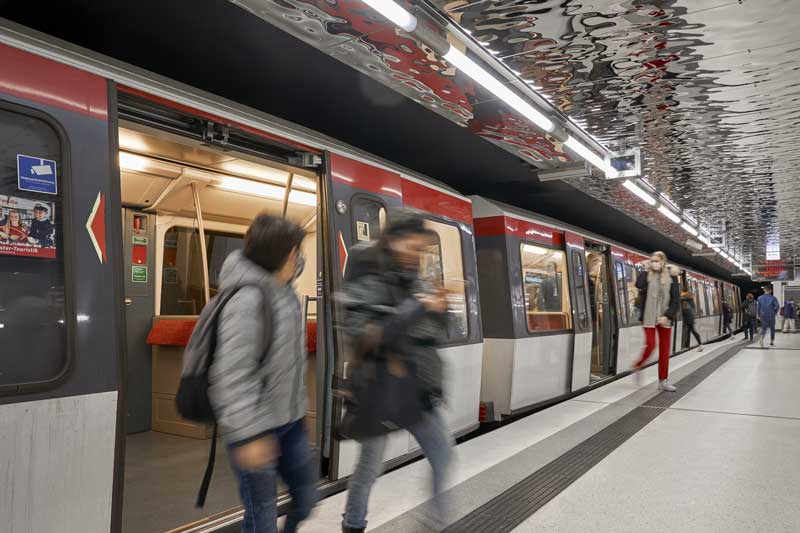
In order to make the area of the Jungfernstieg U1 station appear larger and wider and to virtually double the height of the room, the ceiling above the platform is mirrored.
Lighting quality in harmony with the architecture
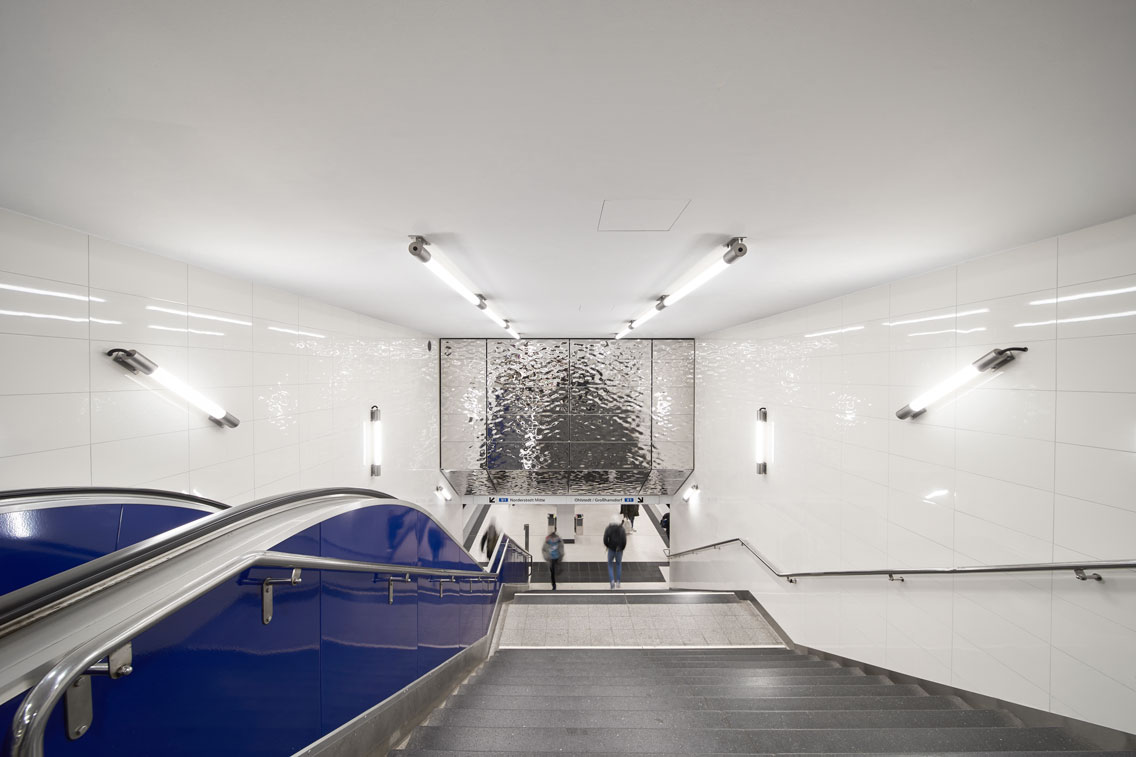
The design theme of reflection is also found in the reflective surfaces of the platform entrances, which are also lit by ZUG LED luminaires.
Back in March 2019, the first samples were provided by the engineering firm ITAB Prolight commissioned with the lighting design. In October, the first prototypes were installed at the Hamburger Hochbahn. A product solution was chosen that uses the NORKA ZUG LED tubular luminaire, which as a row of continuous lighting with a diameter of just 75 mm allowed it to be beautifully integrated into the architecture of the low space – due to the necessary increase in the height of the platform, the station, which itself was already very low, had lost an additional 20 cm in height. The ZUG LED also has all of the features that matter when it comes to illuminating the underground station. The luminaire housing made of transopal PMMA combined with the age-resistant, form-retaining short NORKA sealing system provides high protection rating. The luminaire is protected against overvoltages and meets protection class II with regard to electrical safety. Particularly high requirements apply to glare limitation, both from the train driver’s and the passengers’ points of view. Needless to say, maintenance and servicing work must not interrupt operations which generally means that a high level of reliability and durability is expected – the Hamburger Hochbahn, for example, demands a service life of 100,000 hours.
Lighting technology and design expertise
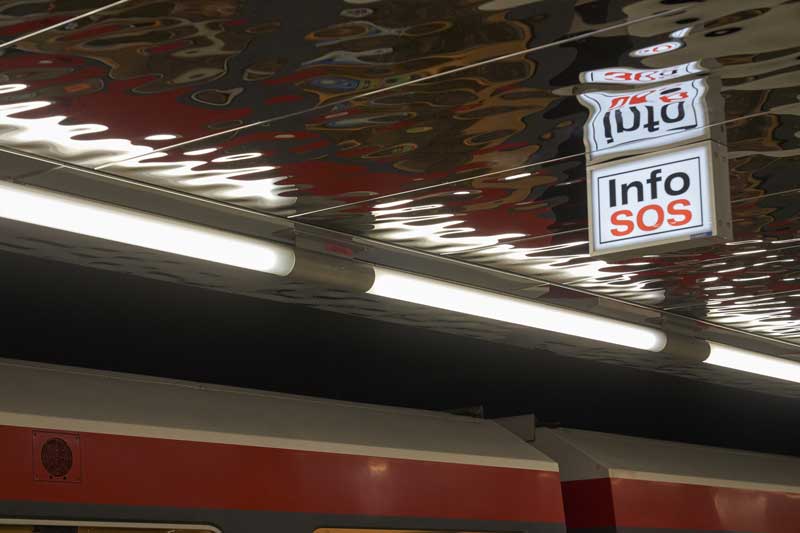
A special stainless steel fastening and connecting element was used to suspend the luminaires from the ceiling with minimal clearance and arranged in a row. This was modified for use in Jungfernstieg station. Inside, the mounting sleeve also has a fixing device for the luminaires. In order to direct the general illumination direction of the medium beam ZUG LED onto the platform, the luminaires were rotated by 45 degrees and fixed in place. The emergency lighting of the platform is controlled by wiring via the continuous row system by operating every fourth luminaire on the emergency network.
The consistent design theme of reflection is also found in the platform entrances, which feature reflective surfaces. Two ZUG LED continuous row luminaires installed centrally above the stairs light the way underground. In addition, individual luminaires provide light for the side walls and, together with the continuous rows, ensure uniform illumination of the area. The new LED lighting thus creates excellent visual conditions for both passengers and train crew. Furthermore, the slim tubular luminaire blends unobtrusively into the architecture of the relatively low space, flooding the platform with uniform light. In conjunction with the reflective ceiling and the black-and-white contrast, this creates a large, expansive spatial impression that will be remembered for a long time.
Used products
Do you agree to the use of Matomo?