
Tunnels and traffic
From underpasses to customised traffic guidance systems
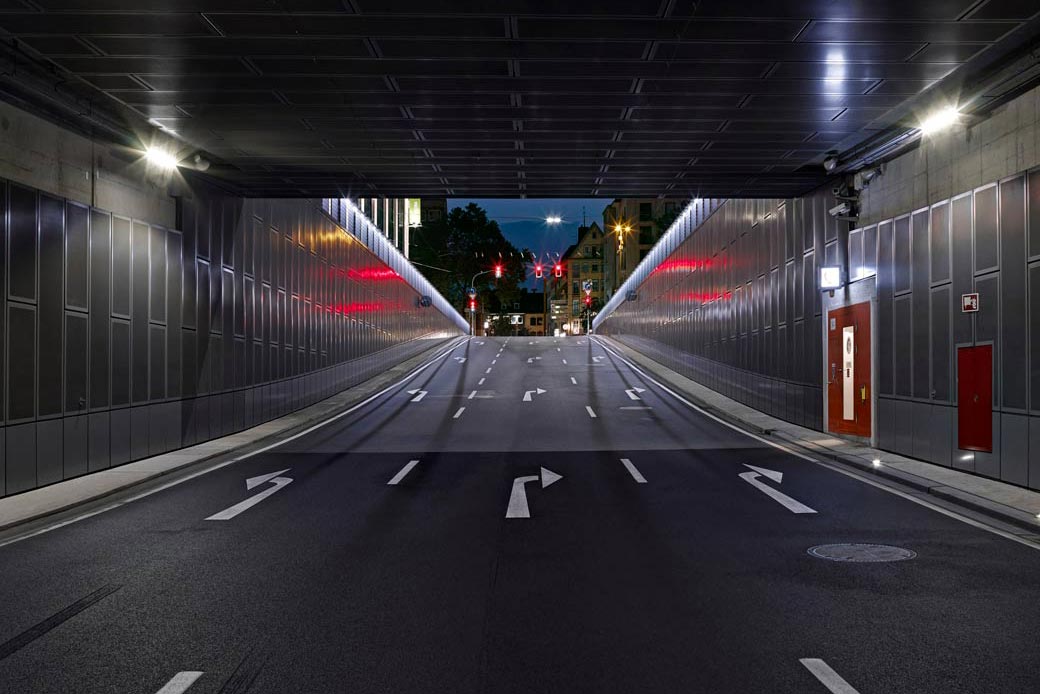
In traffic-related areas, such as for pedestrians, buses, trains or cars, illumination plays a major role. It ensures safety in underpasses, in multi-storey car parks or in road tunnels. At the same time, luminaires in these areas are exposed to fine dust, moisture and great forces such as air pressure and suction.
NORKA’s dedicated product range for road and tunnel lighting: VERNO
Safety, reliability and the highest quality: this is what VERNO stands for – NORKA’s specialist product range for road and tunnel lighting. The name says it all: VERkehr (traffic) + NORKA.
To meet the demands of modern infrastructure, VERNO offers a comprehensive LED portfolio covering all key areas: from entrance and adaptation lighting, through through-road and interior lighting, to complete traffic guidance and the marking of escape routes and hazard zones.
For more information, please visit:
Particularly robust – illumination in underpasses or public toilet facilities
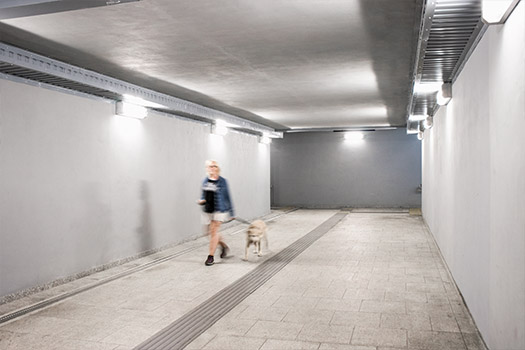
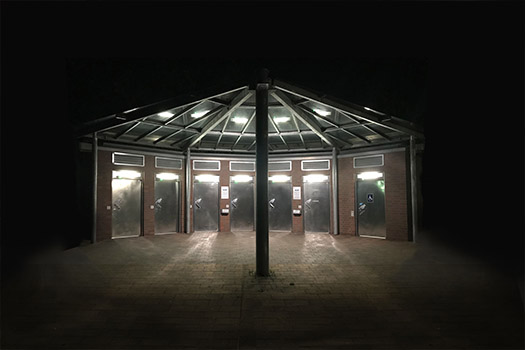
In pedestrian tunnels and underpasses, but also in public toilet facilities, the lighting is repeatedly exposed to the destructive impulses of individuals: Brute force, attempts at tampering and graffiti can cause severe damage to luminaires. The illumination needs to be particularly robust and difficult for vandals to damage. High impact resistance, special screws and coatings can protect luminaires.
Low ceilings, fine dust: multi-storey and underground car parks
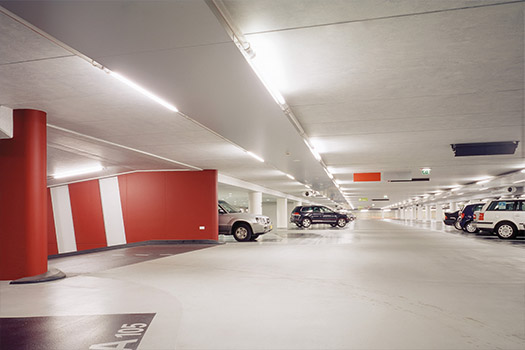
In multi-storey car parks, space is usually very limited, and not only for cars. Low ceilings mean that the space available for lighting is also very limited. Low mounting heights are an advantage in this case. In addition, it is important that luminaires are dust-tight, otherwise fine dust and tyre abrasion may penetrate the housing and affect the lighting quality.
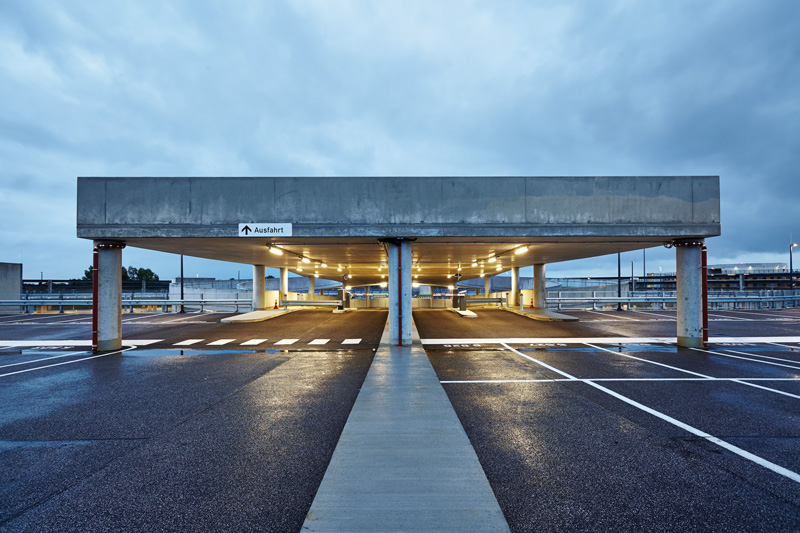
Illumination to ensure traffic safety in tunnels
Most tunnels are individual structures – traffic safety is a top priority. If the worst comes to the worst, good illumination saves lives. This applies right from the moment of entering a road tunnel: The right tunnel entrance illumination helps the eye to adjust to the dark surroundings, and an active visual guidance system steers drivers in the right direction. Within the tunnel, passage illumination ensures good visibility. Escape and rescue route lighting helps pedestrians find their way out as quickly as possible in an emergency. At the end of the tunnel, the lighting again helps the eye to adjust to the natural light outside, thus avoiding glare and confusion.
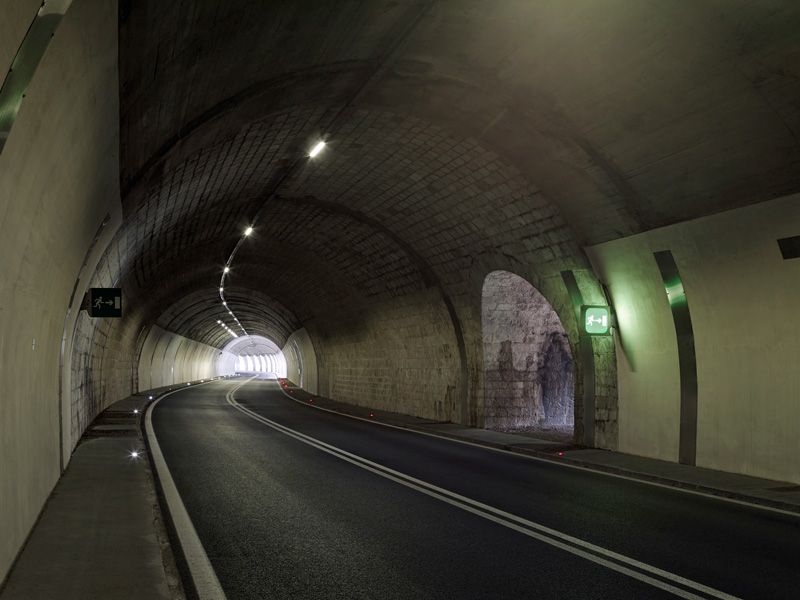
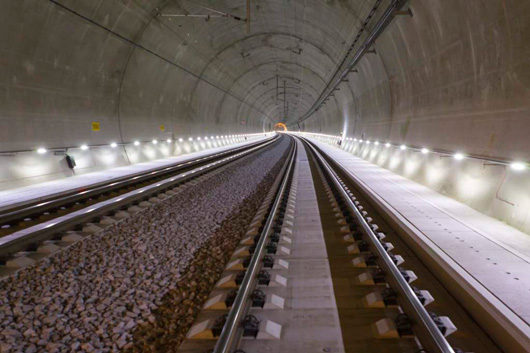
Road tunnels are subject to high requirements, as are rail tunnels.
Road tunnels place very high demands on lighting: The luminaires have to function reliably, because there are generally only short windows of opportunity at night to carry out maintenance. Lighting failure may have fatal consequences and easily cause accidents. In addition, the lighting is exposed to moisture, dust and suction effects caused by large vehicles.
What applies to road tunnels also applies in some respects to rail tunnels. For example, escape and rescue route lighting plays a major role. The lighting must be designed to cope with the high passage speeds and the resulting suction effects. Handrails are often used for pathway lighting.
Do you agree to the use of Matomo?