
LED lighting for public transport – Safe and energy-efficient for platforms and stations
Reliable lighting solutions for public transport – Maximum safety, optimal orientation, and energy savings
How can LED lighting for public transport be implemented in an energy-efficient and sustainable way? Which lighting innovations should suppliers and operators be familiar with? What benefits does intelligent control technology offer? Since 1953, NORKA has been providing LED lighting for public transport, meeting the high requirements of the railway environment. The manufacturer has gained extensive expertise in lighting for trackside areas, is a supplier to Deutsche Bahn, and offers a specialized product portfolio for technically high-quality, energy-efficient, and long-lasting lighting solutions for buses and trains.
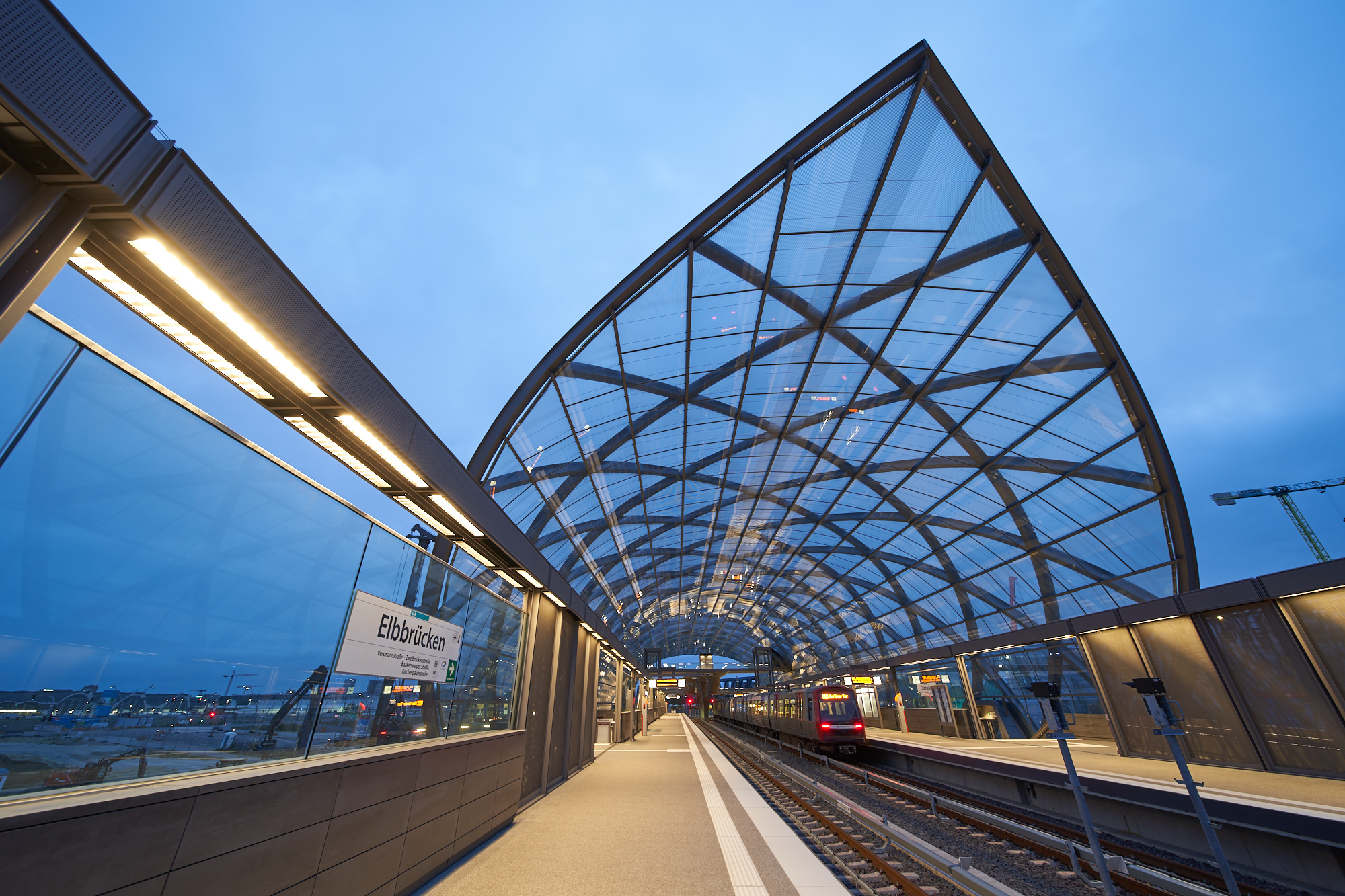
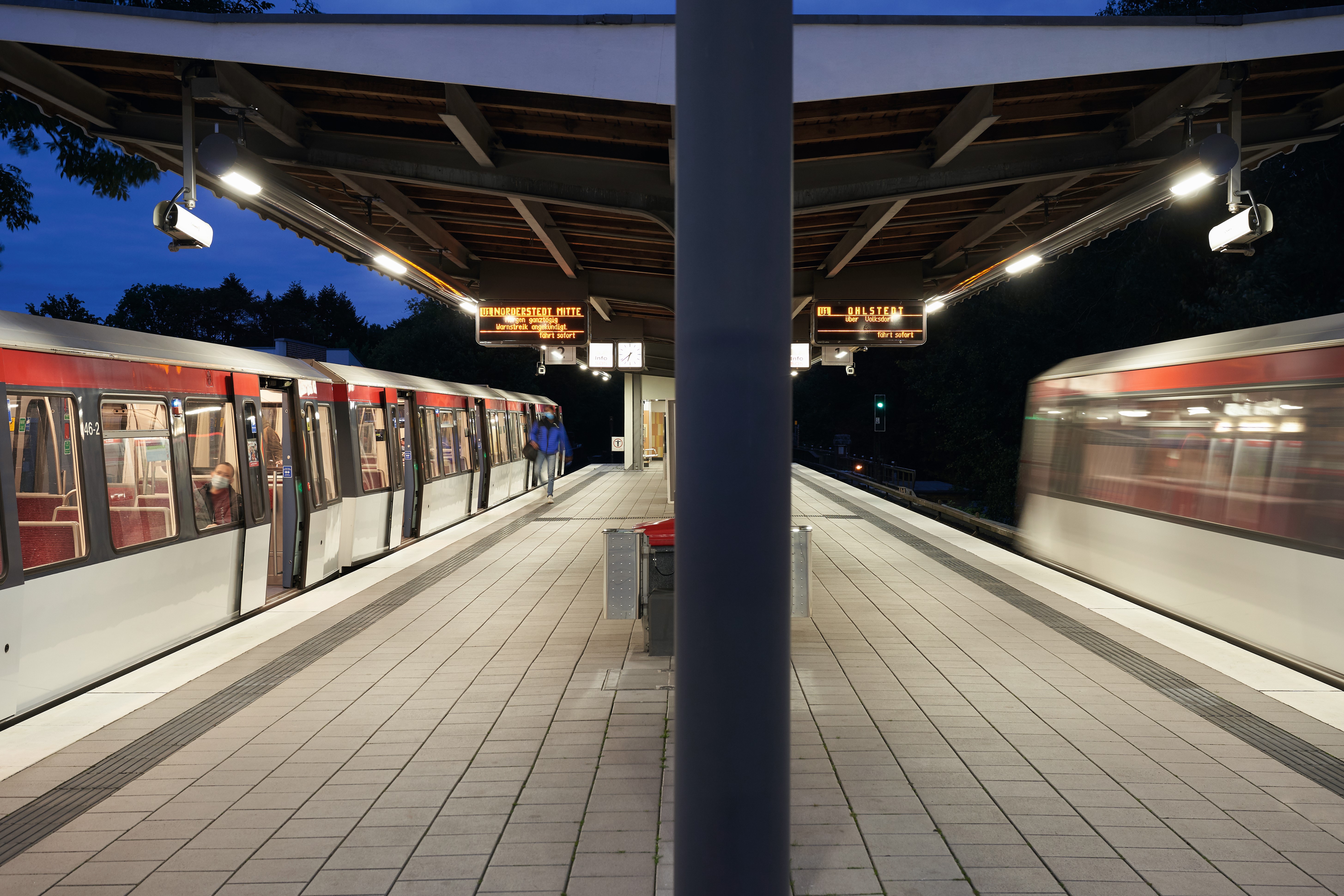
Glare-free LED lighting for safe platforms and stations
Good visual conditions are essential in safety-critical environments such as railway stations and platforms. Particular attention is therefore paid to the glare characteristics of luminaires. Prismatic optics or other dedicated optical systems limit the light emission angle and thus ensure effective glare control. In addition, a uniform luminance across the light-emitting surface contributes significantly to visual comfort. Glare control is especially critical for train drivers. Due to the delayed adaptation of the human eye to changing ambient light levels, a train entering a brightly lit station from a dark section of track represents a potential safety risk. If platform lighting levels are too high, glare may impair the driver’s vision and prevent an adequate response in a hazardous situation. A key parameter in lighting design is the TI value (Threshold Increment), which is used to assess glare in the planning process. Low threshold increment values, such as a maximum of 15 percent as specified by Deutsche Bahn, can only be achieved through the combination of a well-engineered luminaire and a carefully considered lighting design. Equally important are good visual conditions for passengers, enabling clear orientation and safe movement within the station and along the platform. As for the luminaires themselves, they must be particularly robust and capable of withstanding harsh environmental conditions reliably over the long term. Depending on the application, they may be exposed to brake dust, lubricants, water and cleaning agents, transient overvoltage events, and unfortunately in some cases vandalism.
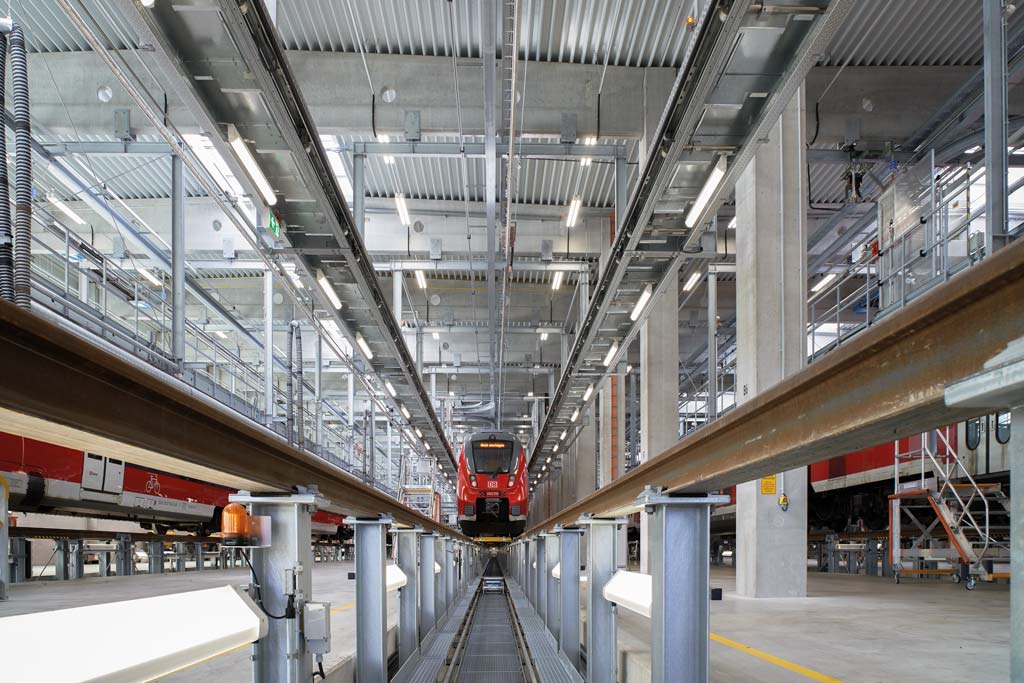
Highest standards for materials and lighting in public transport
Strict regulations must be observed when working with Deutsche Bahn. In addition to the requirements of DIN EN 12464-2 or DIN EN 12464-2:2007, corporate electrical, lighting, and planning guidelines ensure the safety of employees and customers. NORKA luminaires listed for use at Deutsche Bahn are equipped with SELV (Safety Extra Low Voltage) drivers and LED modules. This means that from the secondary side onward, there is galvanic isolation from the mains supply and the supply voltage of the LED modules is limited to safe levels. As a result, maintenance work on the lighting can be carried out safely after brief instruction.
To increase the number of luminaires that can be connected to a single circuit, which is particularly relevant for the renovation of older installations, NORKA luminaires feature an integrated inrush current limiter certified to ENEC standards. This limiter is equipped with a 4 kV filter to protect the luminaires from network disturbances.
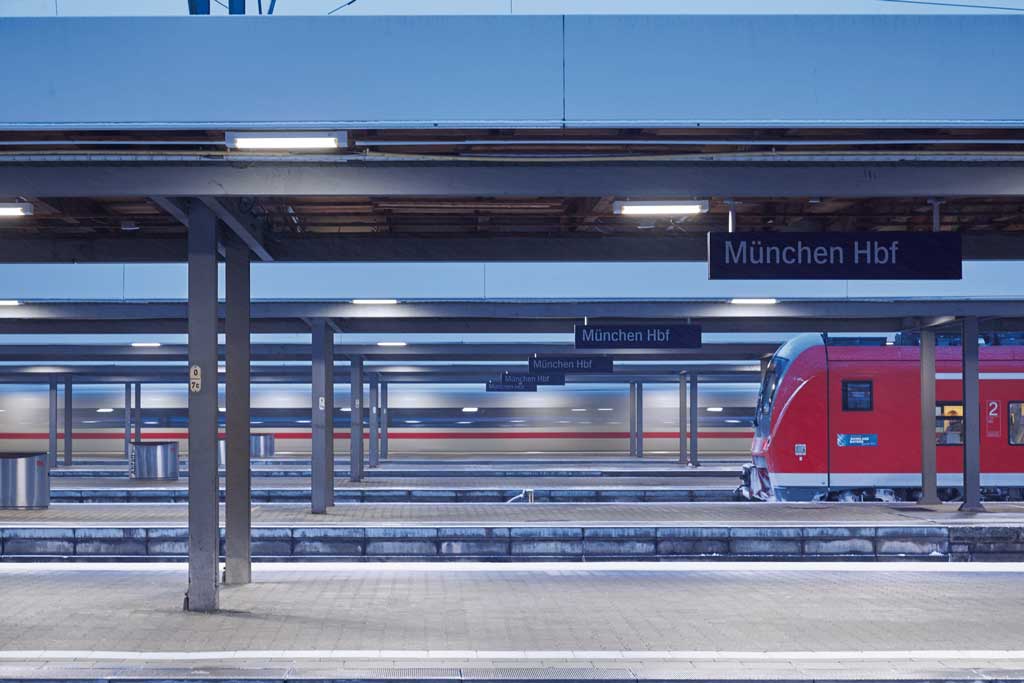
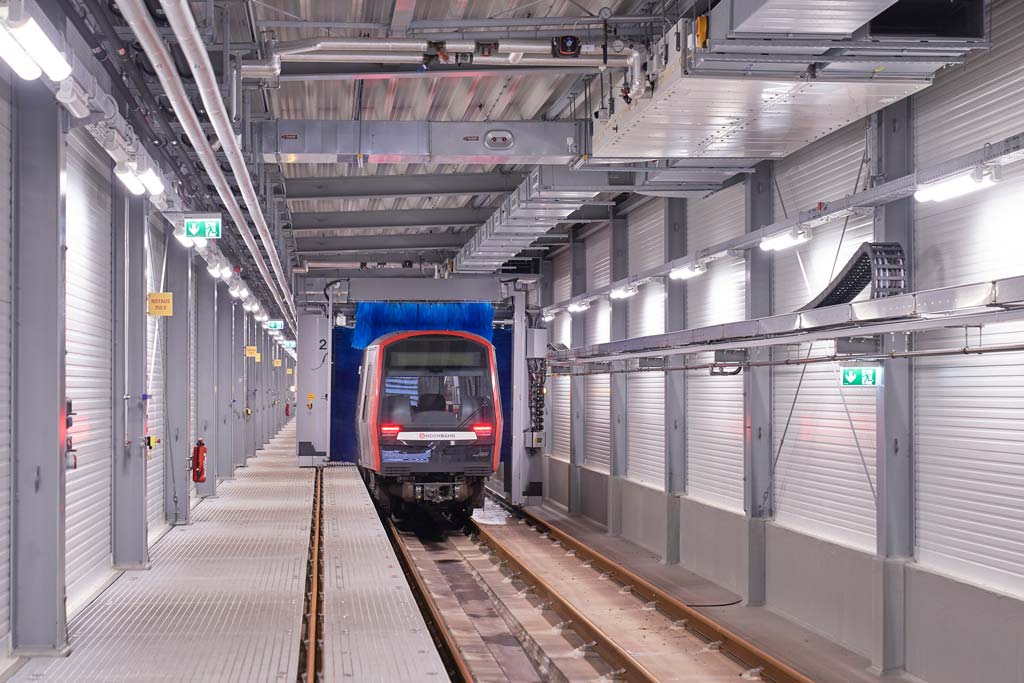
Water resistance is a key consideration in lighting applications. Both vehicles and stations are regularly cleaned: wash stations for trains and buses keep the vehicles shining, while cleaning crews remove dirt and debris from stations using high-pressure washers. To ensure that the lighting can withstand these cleaning processes without damage, two factors must be considered: the use of luminaires with a high degree of protection and resistance to cleaning agents.
NORKA luminaires generally provide at least protection against water jets (IP65), while for cleaning with high-pressure or steam jets, luminaires with IP69K protection are suitable. In workshop areas, chemical resistance to gasoline, diesel, and other lubricants is essential. In areas where cleaning agents are used, the choice of appropriate materials is critical, as some housing materials can be chemically attacked, which over time may reduce their structural integrity.
Power outages in publicly accessible areas and workplaces create hazardous situations. To prevent panic and injuries, continuous adequate visibility must be ensured. This is where emergency lighting comes into play, enabling the safe evacuation of buildings, stations, and tunnels. Many luminaire models can be equipped either for central battery systems or as individual battery-powered emergency lights.
Energy-efficient LED lighting for cost-effective operation in public transport
Simply replacing conventional lighting with modern LED systems can achieve operational cost savings of up to 50 percent or more. The use of intelligent control systems, for example daylight-dependent dimming in maintenance halls, combined with lower maintenance costs thanks to long-lasting LED modules, can further enhance these savings. Additional benefits include increased safety and comfort for both employees and passengers in public local and long-distance transport.
Do you agree to the use of Matomo?