
LED solutions for a modern luminaire concept – Stadtbahn stop Staatsgalerie Stuttgart
The new station stands out thanks to its clean design and a consistent lighting scheme
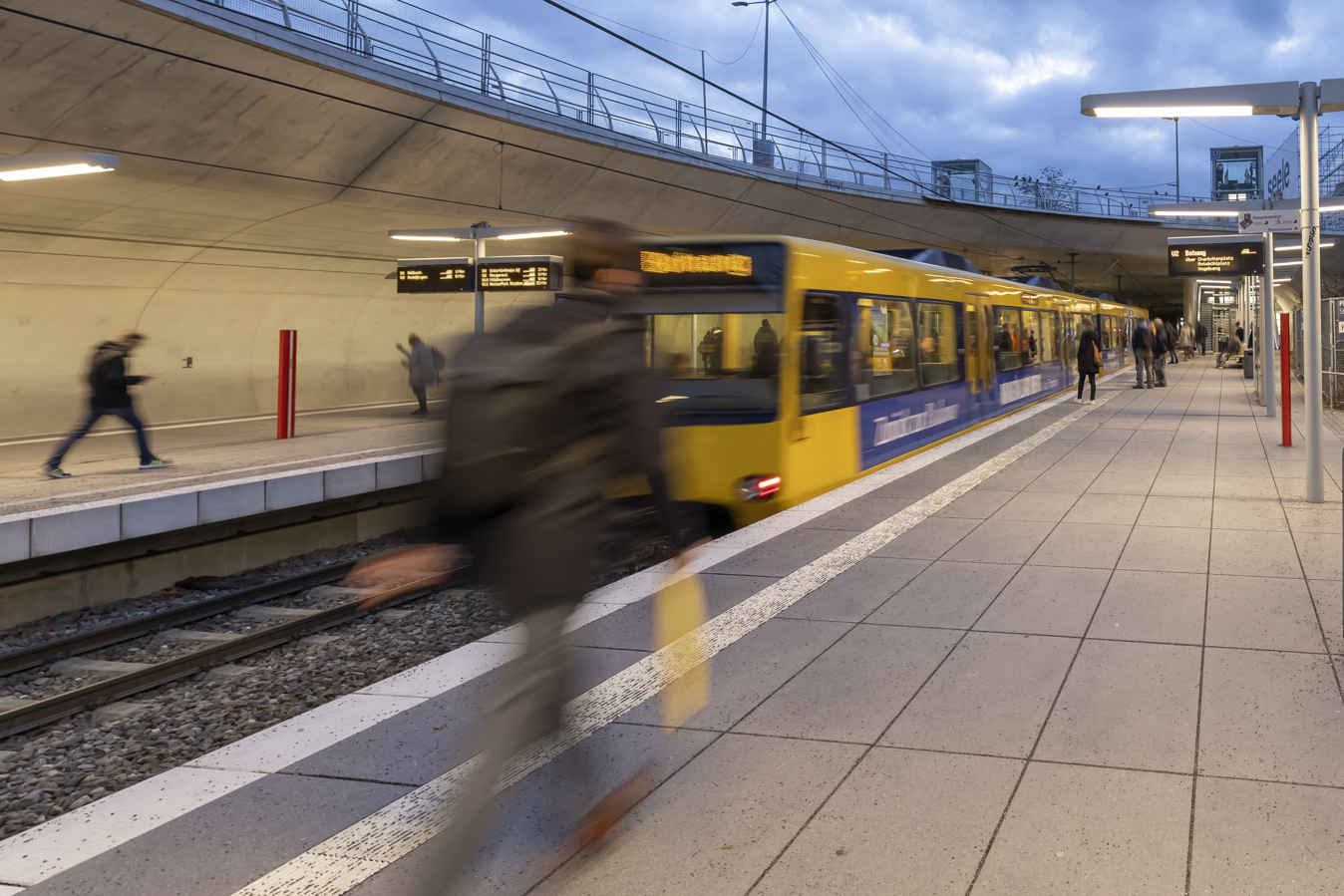
The new Stadtbahn stop Staatsgalerie in Stuttgart was built immediately next to the old stop of the same name. Unlike the old, completely underground and outdated facility, it presents itself as a modern, light-filled space that is partially open at the top, creating an airy atmosphere. The generously entering daylight is complemented and enhanced by artificial lighting, which meets both functional requirements and design standards, showcasing the architecture appropriately.
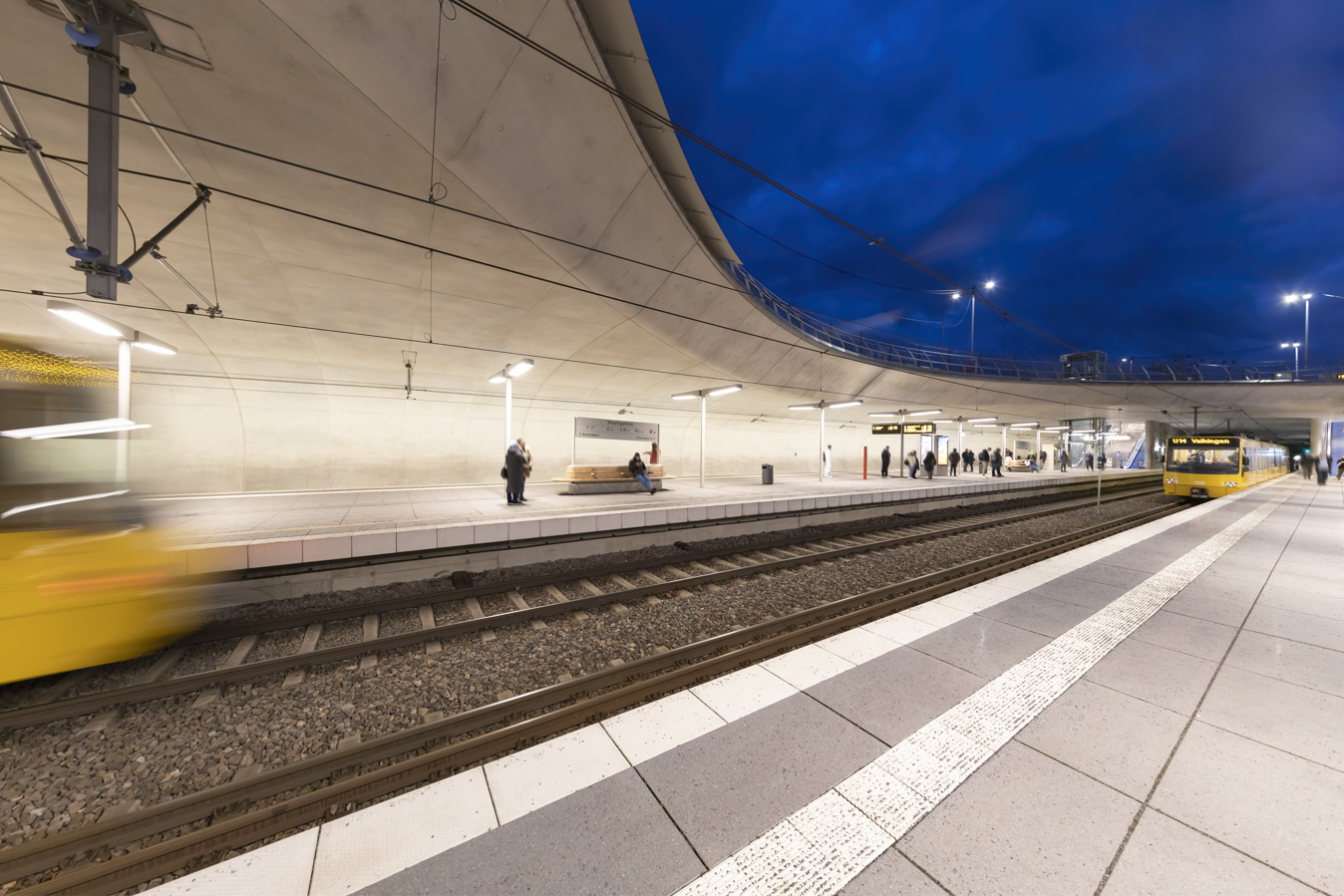
With the Stuttgart 21 transport project by Deutsche Bahn AG (DB), one of the largest and most complex infrastructure projects in Germany is currently being implemented. It involves the redesign of Stuttgart’s main station as well as the construction of new tunnels and connecting lines for long-distance and local transport throughout the Stuttgart/Ulm region. The network of the Stuttgarter Straßenbahnen AG (SSB) has also been affected by the construction work, posing significant challenges both structurally and operationally. One of these challenges was the construction of the new Stadtbahn stop Staatsgalerie. This became necessary because the old stop, in its previous location, obstructed the new intersecting tunnels of the underground station. Relocation to the west and elevation by approximately three meters was unavoidable, so that the new Stadtbahn tunnels now run above the new long-distance railway tunnel.
Recurring architectural expression
As with the new underground station, the design was created by ingenhoven architects from Düsseldorf. A central goal was to design the stop so that both structures are perceived as a unified architectural entity. The choice of materials, geometry, and color scheme were therefore carefully coordinated and reflect the architectural language of the underground station. As Christoph Ingenhoven stated at a press conference introducing the new stop: 'Many fundamental ideas of the new main station, in terms of its spatial and material qualities, are already reflected in the stop.'
The three-track stop features a side platform and a central platform, both designed as high platforms. The platform lengths are dimensioned for trains operating in double traction up to 80 meters in length, with a structural provision to extend the platforms up to 120 meters if required. A 30-meter-wide vaulted shell roof, open towards the Schlossgarten/Planetarium, spans the stop. Similar to the underground station, so-called white concrete is used throughout, which is significantly lighter than conventional gray concrete. The construction of the curved wall surfaces was particularly demanding, as it required custom-made formwork and the installation of pre-bent, multilayered reinforcing steel.
Wide-ranging lighting requirements
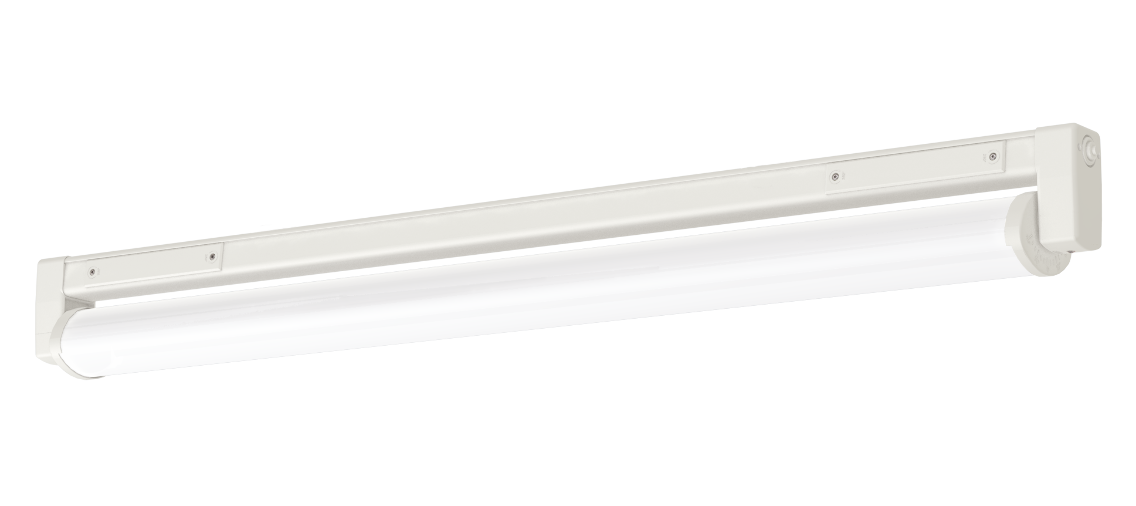
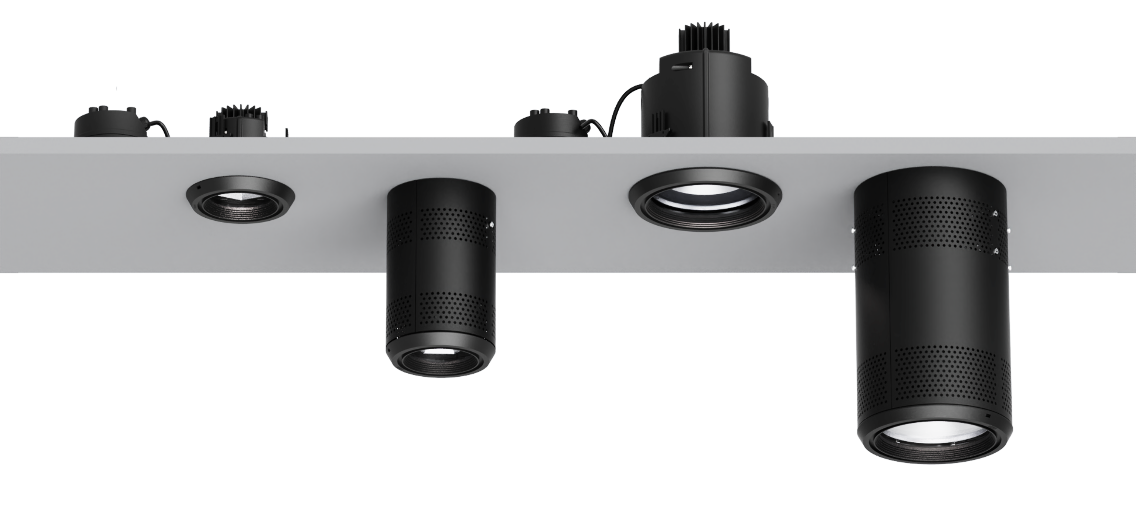
Visible from a distance, a large portal with a destination display guides pedestrians to the staircase with two escalators leading down to the platforms. ERFURT LED luminaires, elegantly integrated into the destination display with a wide-area light distribution, illuminate the entrance to the tracks. Further along the route, broad-beam MERKUR LED recessed luminaires are integrated into the vaulted concrete ceiling to light the passageway. At the bottom, a large, bright, and welcoming space opens up, partially open at the top, allowing generous amounts of daylight to enter.
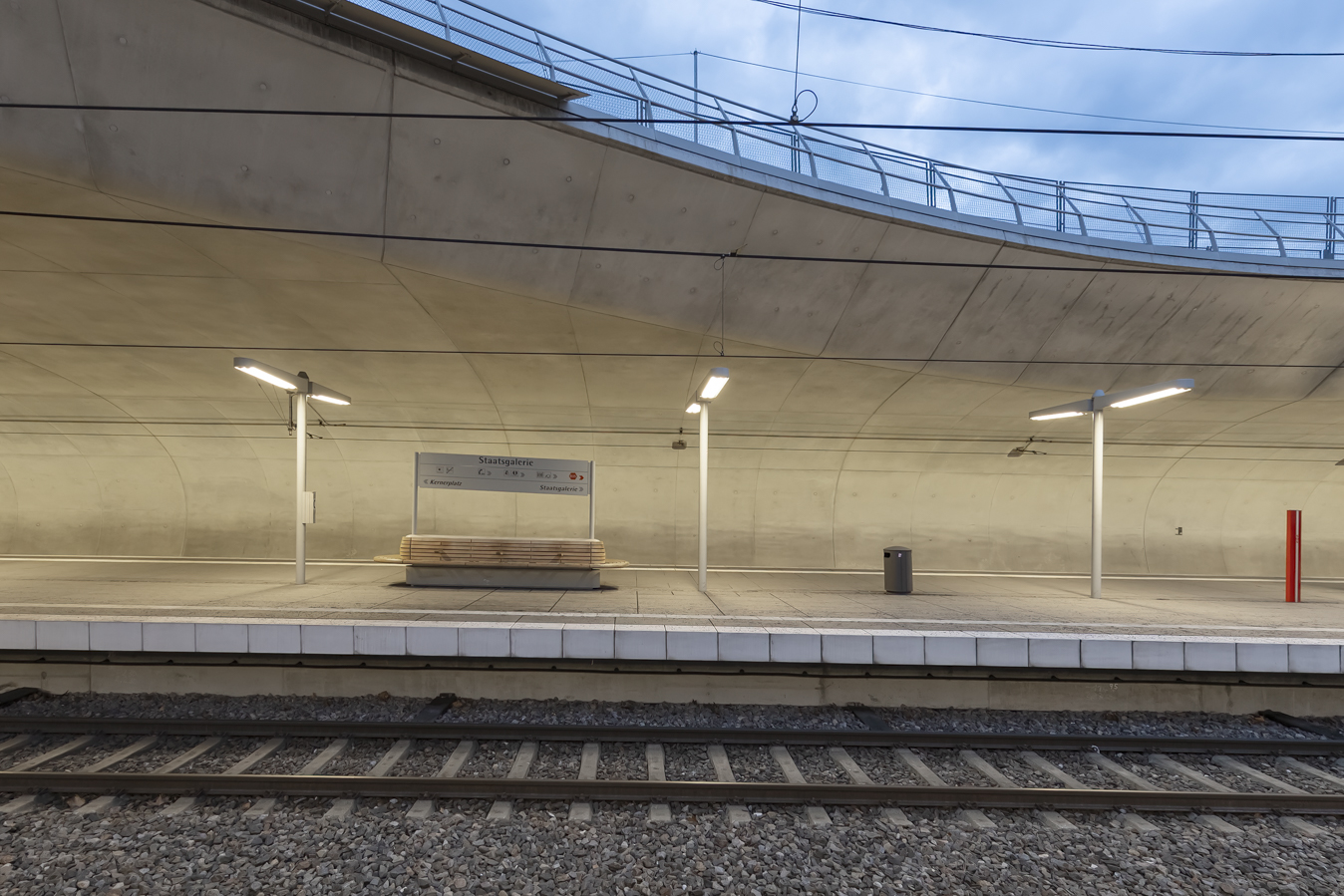
"In terms of lighting, the station presents itself as a hybrid between daylight and artificial light: 'On one hand, it’s an underground station, yet still filled with a lot of daylight,' characterizes Frank Krauß, who oversaw the station construction as Project Manager for Power Supply-Low Voltage at SSB. 'We therefore comply with all lighting requirements for an underground station without daylight, i.e., 150 lux on the platforms and a uniformity ratio of 1:4.'
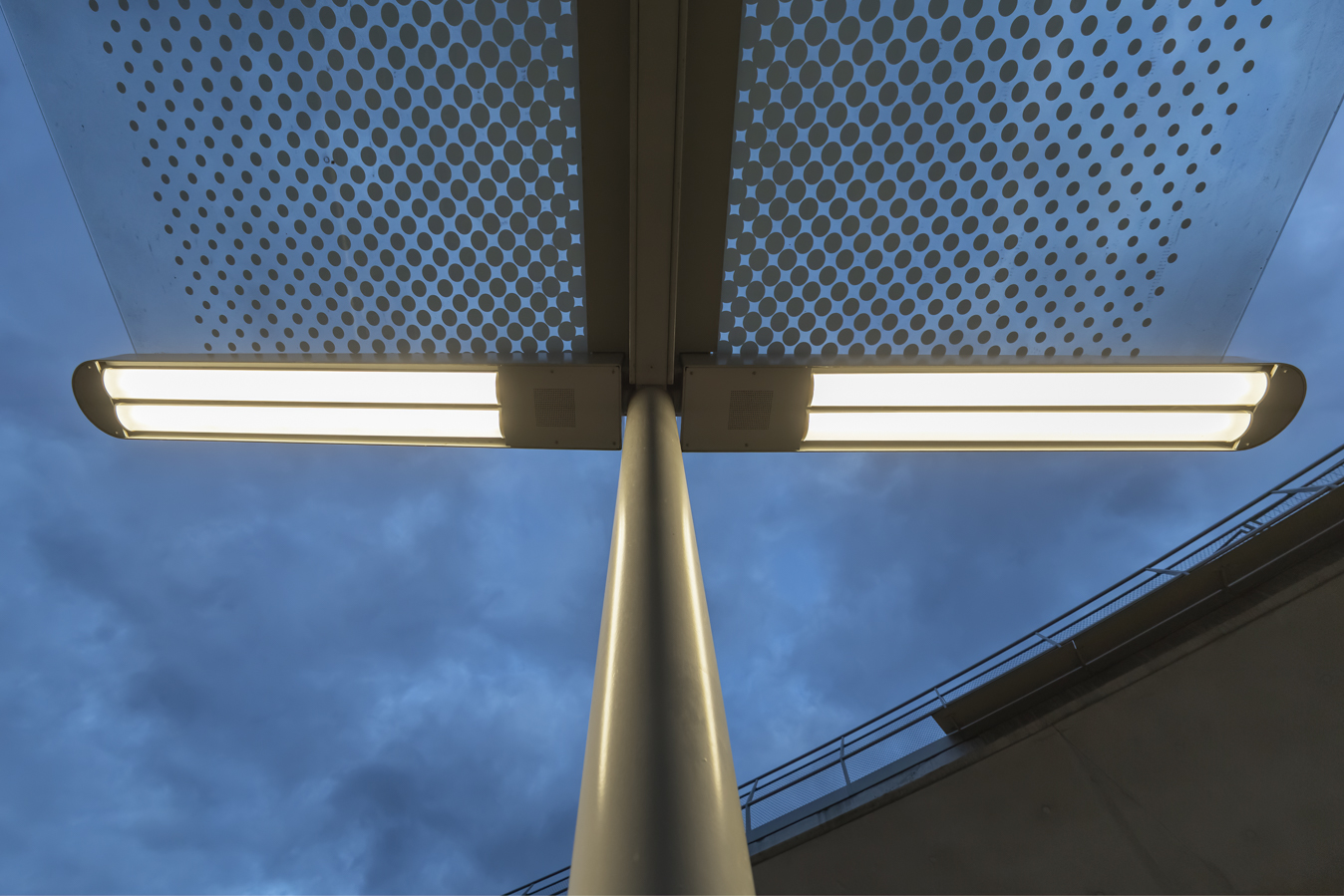
For platform lighting, specially designed T-shaped, 3.7-meter-high light poles were developed and installed at 5.5-meter intervals along the center of the platforms. Each pole supports two single-lamp NORKA ERFURT LED protective-tube reflector luminaires on both sides, with a translucent PMMA cover. The wide-area light distribution of the downward-directed reflectors ensures uniform illumination of the entire platform at 150 lux, right up to the platform edge. The elegant, filigree-looking luminaire housings also integrate the speakers for announcements by railway personnel. Additionally, some poles are covered with a glass roof, functioning as a weather-protected waiting area.
To ensure uniform illumination of the vaulted walls of the track trough, ERFURT LED luminaires were mounted slightly offset in the floor channel along the trough, fitted with a frosted glass cover. Prior tests and sample installations were conducted in another station that also featured a slight curve and similar lighting conditions.
The luminaires used in the track tunnel must meet a number of special requirements: the tram driver must not be disturbed or dazzled by the light; sufficient brightness must be provided to allow maintenance and other repairs; and last but not least, in the event of an emergency, rescue personnel must be able to reach the site safely and passengers must be able to exit the tunnel safely.
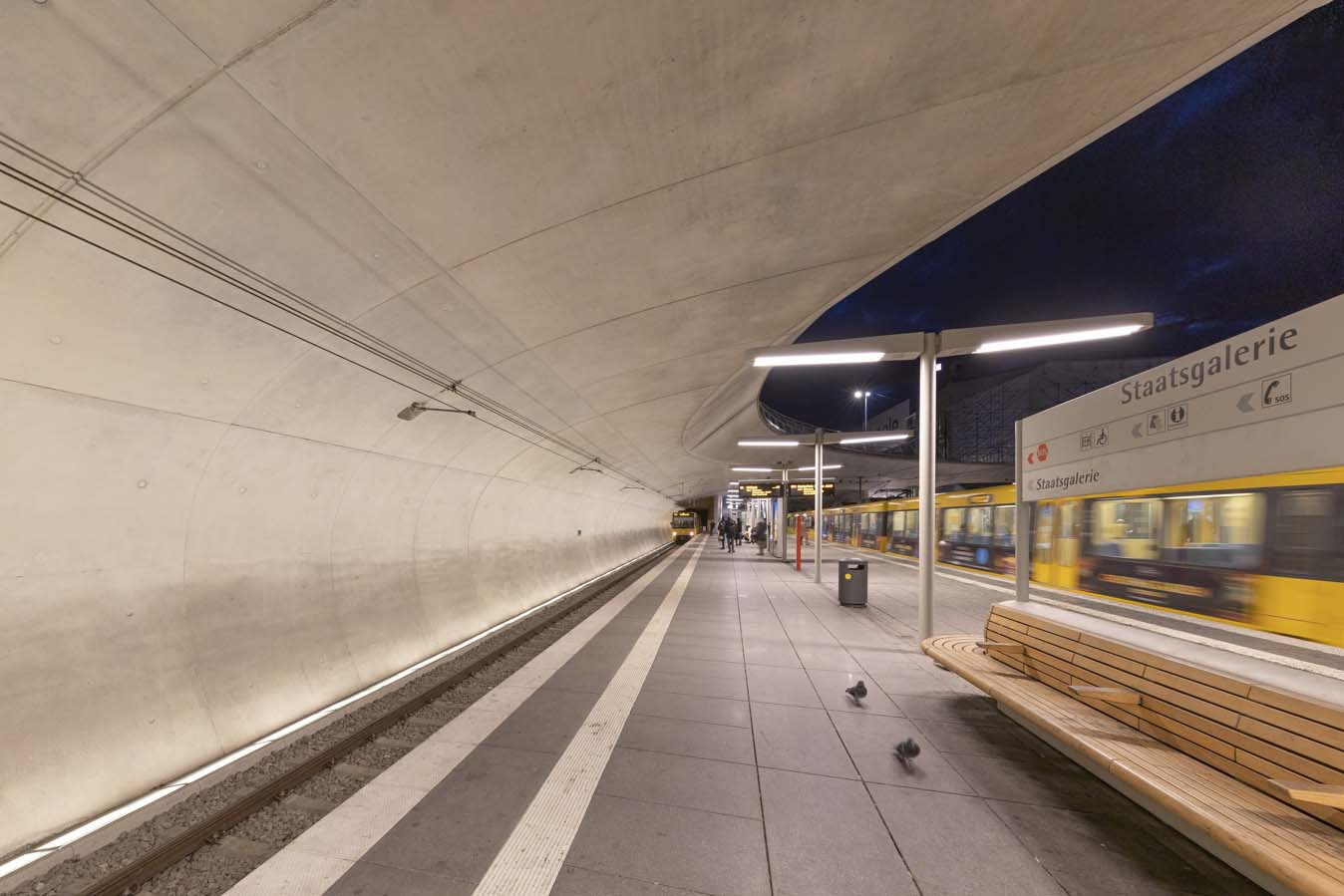
"We installed a tunnel luminaire every 10 meters, which we designed together with NORKA,' explains Frank Krauß, adding, 'It illuminates the safe escape route, where we have requirements of 10 lux and a uniformity ratio of 1:10. The driver is not dazzled, and there is indirect upward lighting so that colleagues in the catenary area can inspect the overhead lines.' Based on the ERFURT LED, this luminaire features a modified reflector that directs the light precisely downwards, as well as an upward light output for ceiling illumination".
A station designed for comfort
The area around the Staatsgalerie stop is still in construction mode. However, it is already possible to imagine a park being created on the station’s surface, with green lawns extending almost up to the platform edge of the stop, and the temporary access to the Planetarium forming a seamless transition into the grass. This will further enhance the quality of stay at this location. Even now, the naturally ventilated and daylight-filled space provides a comfortable environment. The artificial lighting also supports this aspect, not least through the consistent use of 3000 K light, which gives the entire station a pleasantly warm atmosphere.
Products in use
Do you agree to the use of Matomo?