
NORKA illuminates the Köhlbrandhöft Wastewater Treatment plant in Hamburg
Robust luminaires for challenging industrial environments
Energy-efficient, centrally monitored and controlled, long lasting no matter what: NORKA delivers the lighting system for the new building of Hamburg’s large-scale waste water treatment plant Köhlbrandhöft.
Not only Hamburg, but also Buxtehude, Reinbek and Kayhude send their waste water on its way to Köhlbrandhöft. Within sight of the container terminals of the Port of Hamburg, an enormous 150 million cubic metres of waste water are treated each year before being discharged into the Elbe. The water comes from private households and from industry, or is mixed water from precipitation. The Köhlbrandhöft waste water treatment plant has 556 pumps, 250 employees and myriads of busy micro-organisms taking care of biological purification.
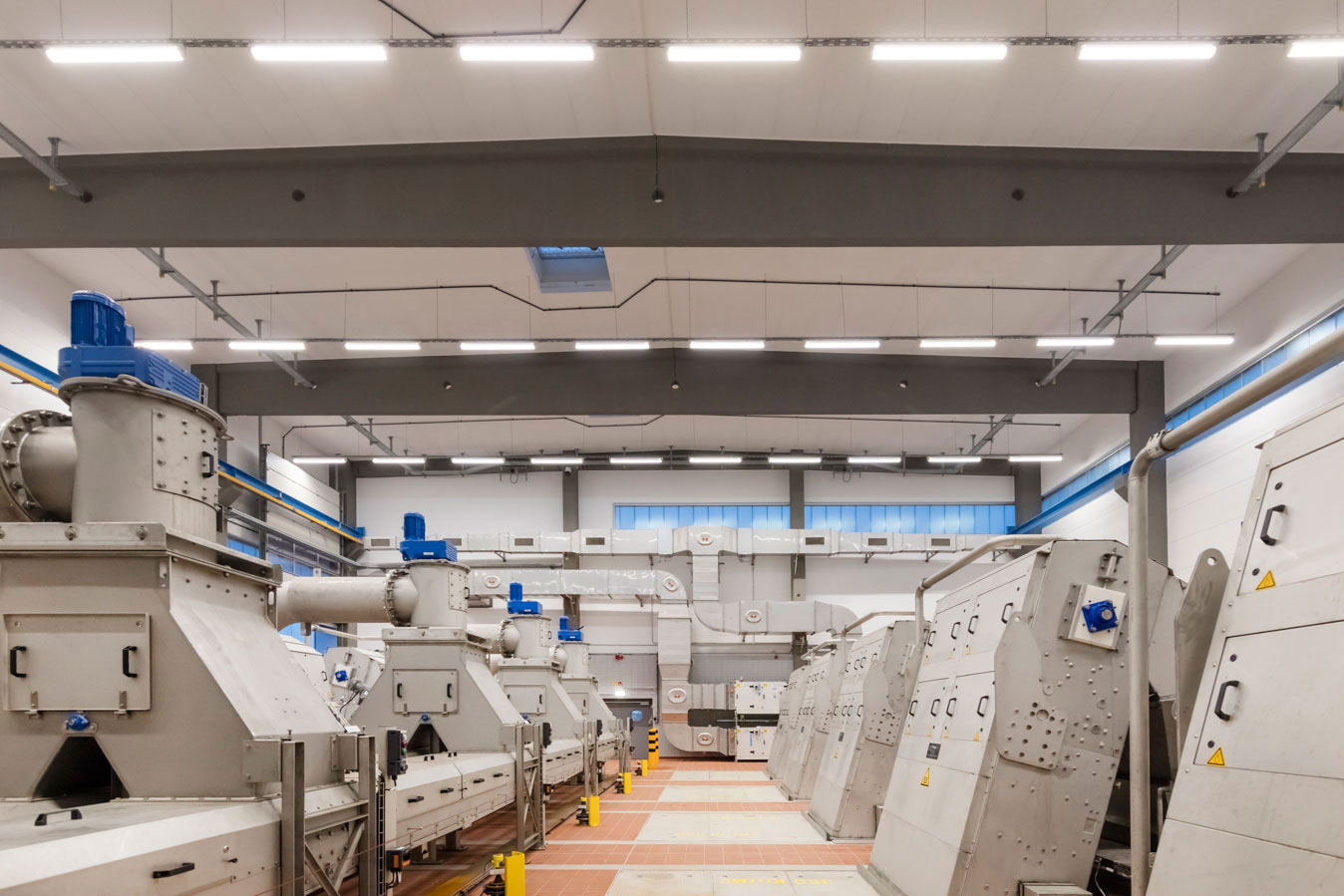
NORKA luminaires fit perfectly in this demanding environment.
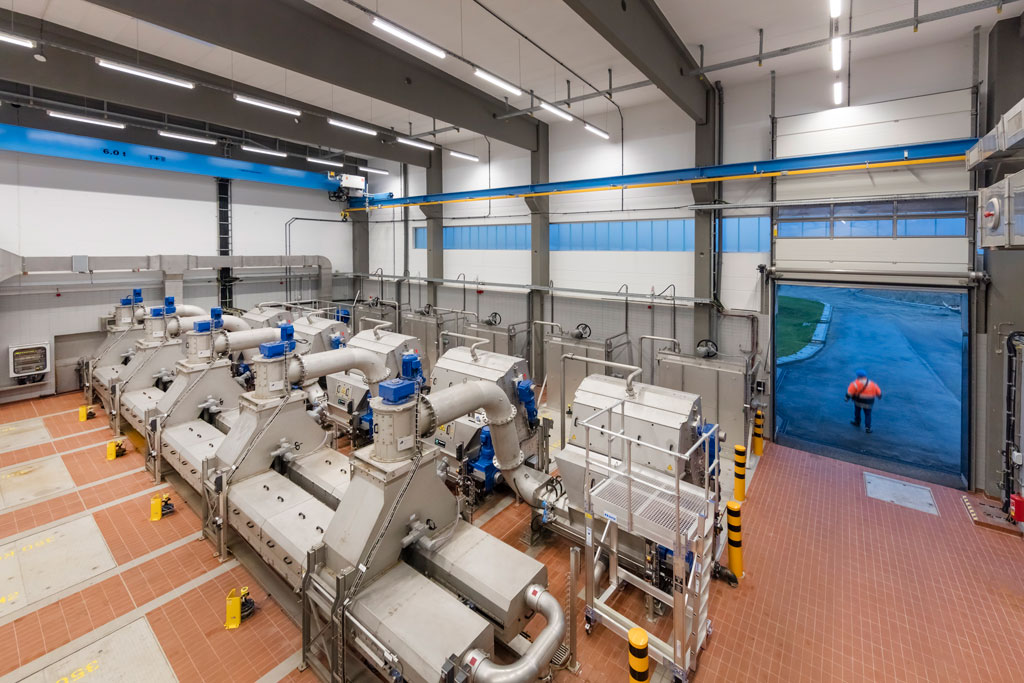
Energy efficiency above all
Despite the enormous volumes, the waste water treatment plant is self-sufficient in terms of energy; in other words, it produces its own electricity – from digester gas, sewage sludge, wind and the sun. All efforts are focused on maximising energy efficiency – including at the lighting level, for example, in the new grit treatment hall and the equally new screening building. Both the general lighting and the safety lighting have been completely designed with LED luminaires from Norka. They are efficient, long lasting and can be integrated into the digital control concept of the waste water treatment plant.
Resistant to sewage gases
ERFURT LED luminaires are used in both machinery halls as this type of luminaire also performs reliably in chemically aggressive atmospheres. The corridors and stairwells are equipped with the NORKA MÜNCHEN LED luminaires; SCHÖNEFELD is used as the escape route luminaire. As a lighting specialist for tough environments, NORKA tests their materials for resistance to various chemical substances. But not only the luminaires themselves, also the associated mounting rails are designed for maximum resistance. Needless to say, this also applies in relation to sewage gases. That’s why NORKA also partly installed explosion-proof elements at the Köhlbrandhöft waste water treatment plant. Some of the luminaires are equipped with batteries – any necessary function and runtime tests can be carried out automatically, centrally and at defined time intervals in accordance with EN 50172/VDE 0108.
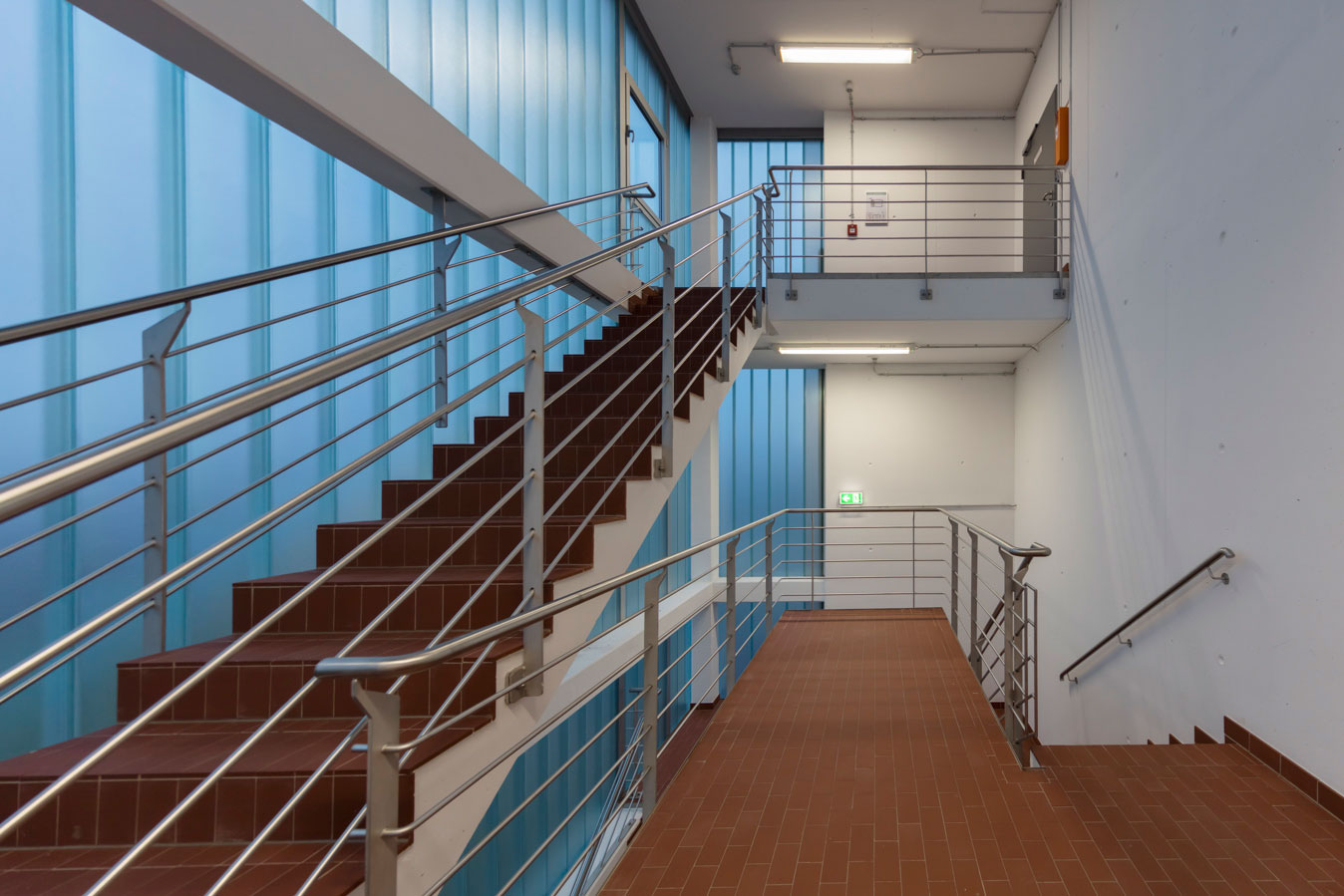
The corridors and stairwells are equipped with the NORKA MÜNCHEN LED luminaires.
All of the results are documented in compliance with standards. This feature was expressly requested by the owner and operator of the waste water treatment plant, Hamburg Wasser. NORKA, who has already been involved in other successful Hamburg Wasser projects, was able to offer a solution at control level for this part of the specifications. Incidentally, external emergency lighting supply units of type PASSAU LED with maintenance-free NiMH rechargeable batteries were used for emergency luminaires installed at great heights. These are not located in the luminaires but at floor level, which considerably improves accessibility and in turn reduces the maintenance effort.
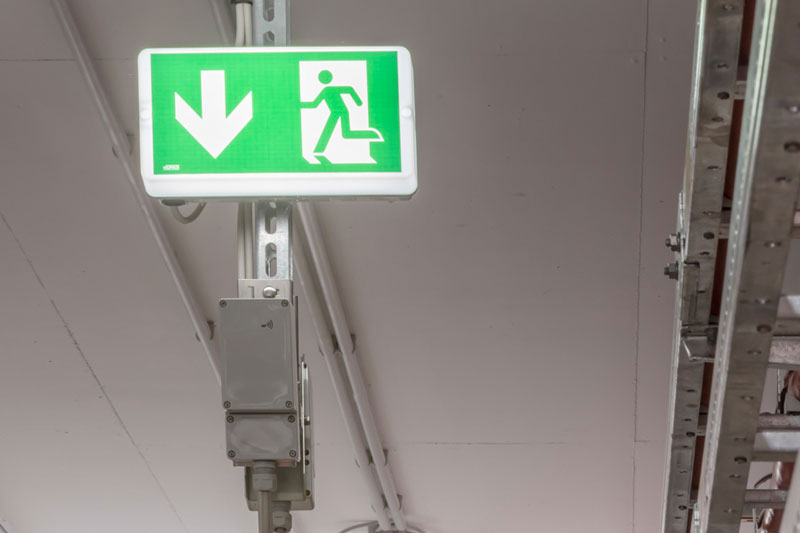
Our SCHÖNEFELD is used as the escape route luminaire.
Automatic mode as standard
It was not just a question of luminaires alone, of course, but of integrating them into a complex, sensor-supported control system with a link to the central process control system. Ultimately, the integration of outdoor luminaires from another manufacturer was also required. Radar sensors detect movements in the vast halls and automatically turn the luminaires installed in them up to 200 lux; after a certain time without detected movement, the luminaires are dimmed down again. Compared to infrared sensors, radar sensors offer a better resolution and allow for more specific coverage of certain areas in the machine halls full of plant technology. Although there are still push-buttons for manual operation in the halls, automatic operation is still the norm. This ensures both more efficient energy use and greater safety at work.
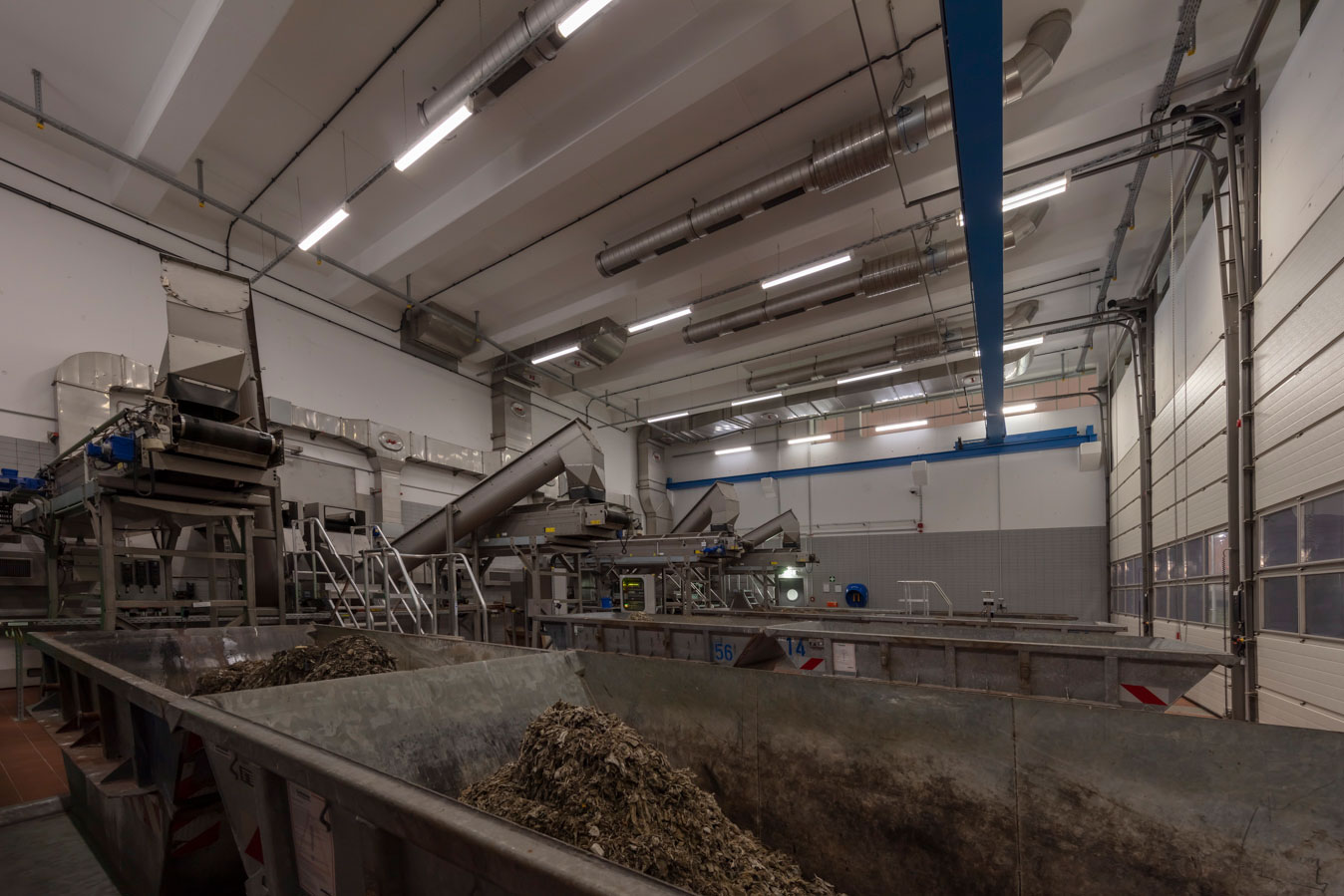
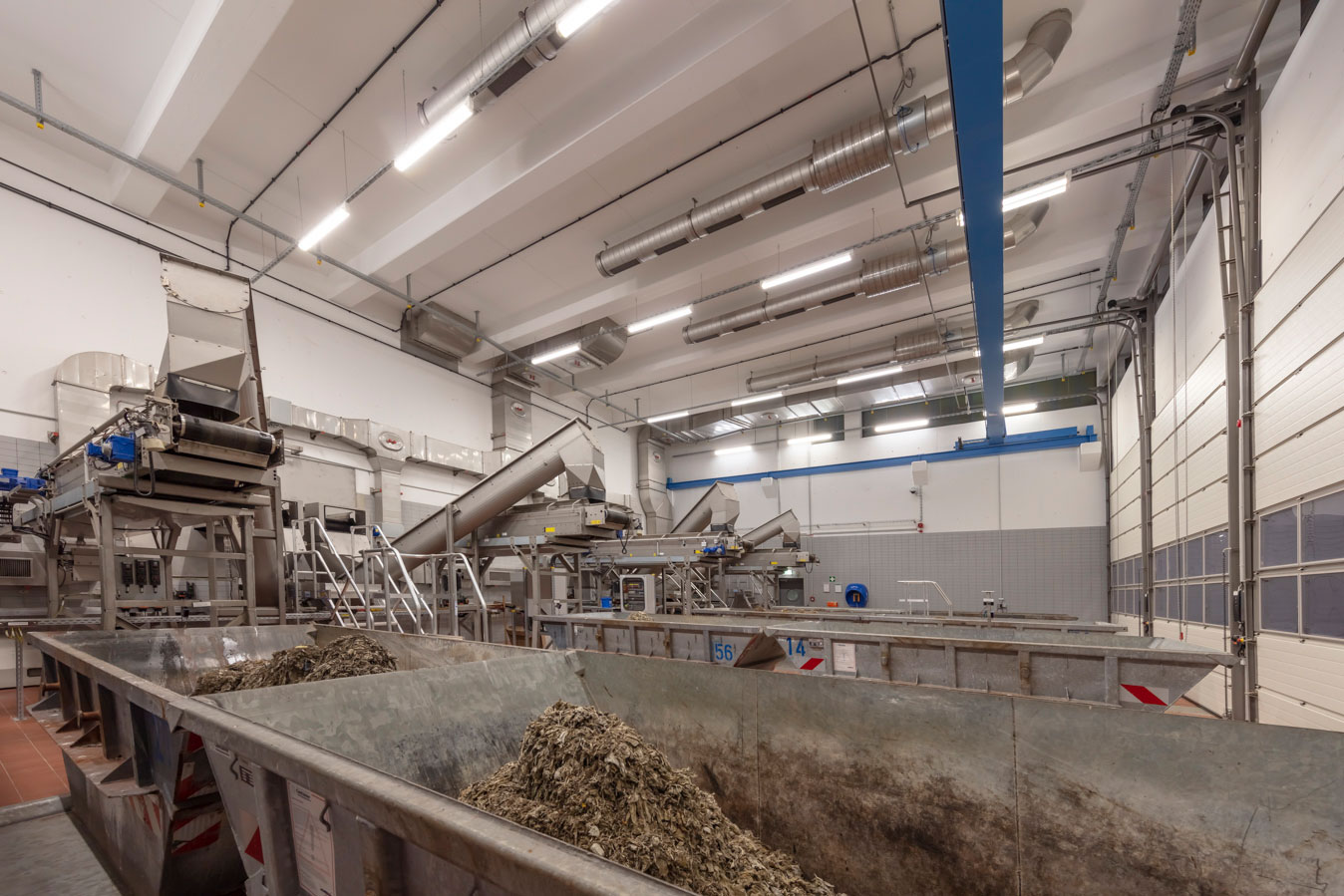
Radar sensors detect movements in the vast halls and automatically turn the luminaires installed up.
Integration into the process control system
All the luminaires in the building converge in the central control cabinet, which was supplied completely pre-wired by NORKA Automation. The touch panel in the front of the cabinet can be used to manually override the automatic system if necessary, for example, when local maintenance work is due or the lighting time profiles need to be adjusted. Each of these switching units links its information via defined interfaces to the primary central process control system of the waste water treatment plant. This allows status data and error messages to be received centrally in the control room; from there, queries can be made and maintenance staff can be given automated work orders. The open control system from NORKA Automation even allows the outdoor luminaires of other manufacturers to be integrated – these can also be accessed and checked from the control room. By the way, this also applies to the large, luminous logos on the facades.
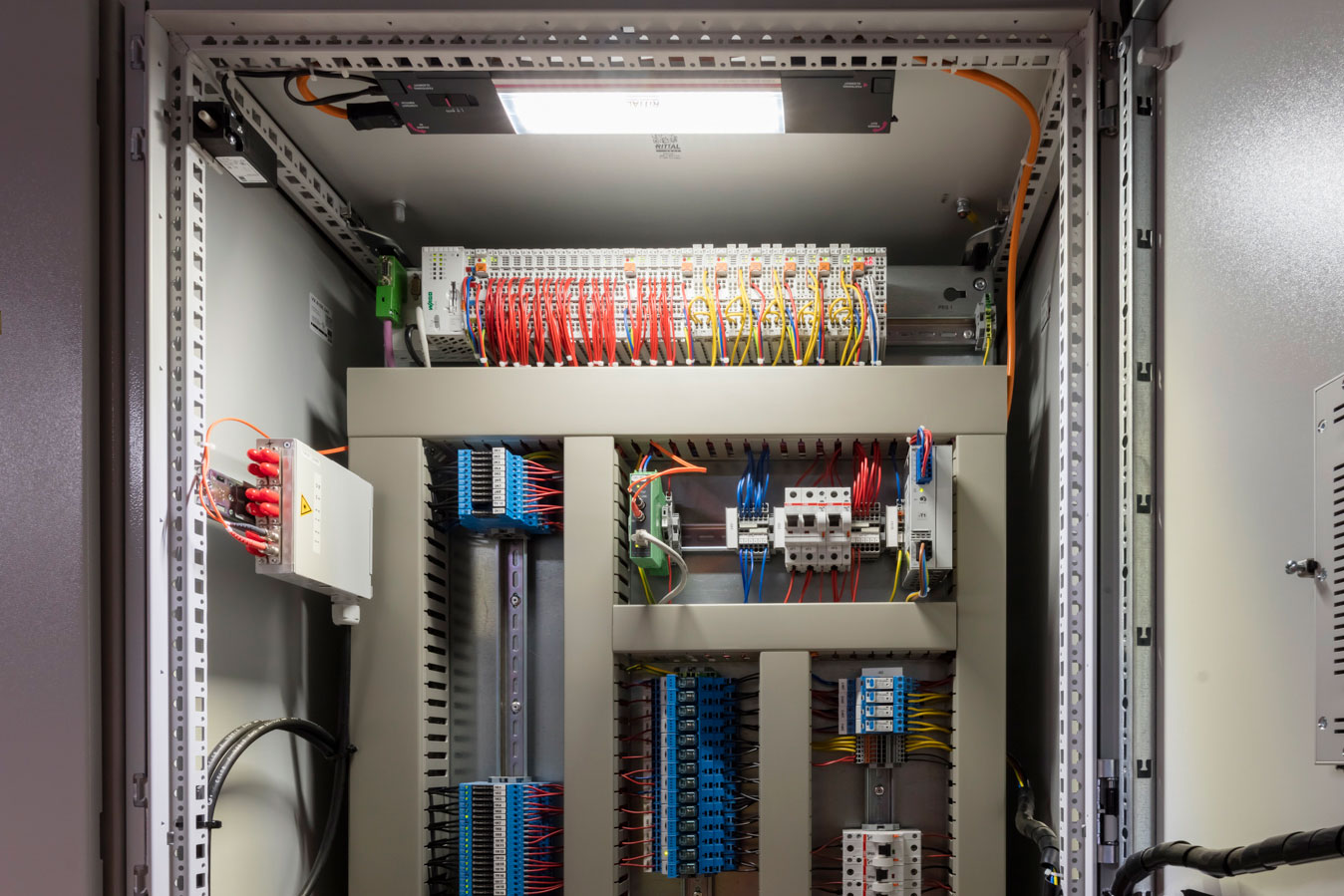
The central control cabinet was supplied completely pre-wired by NORKA Automation.
A unified whole
This project exemplifies how much synergistic potential can evolve from a comprehensive solution developed by NORKA. In addition to the specific selection of suitable luminaires and emergency lighting, this particularly includes the conception of the control system and its programming, the energy distribution and, ultimately, the specific support of the planners.
Used products
Lighting control system
Photos: NORKA/Frieder Blickle
Do you agree to the use of Matomo?